

Daylight Saving Time Is Coming
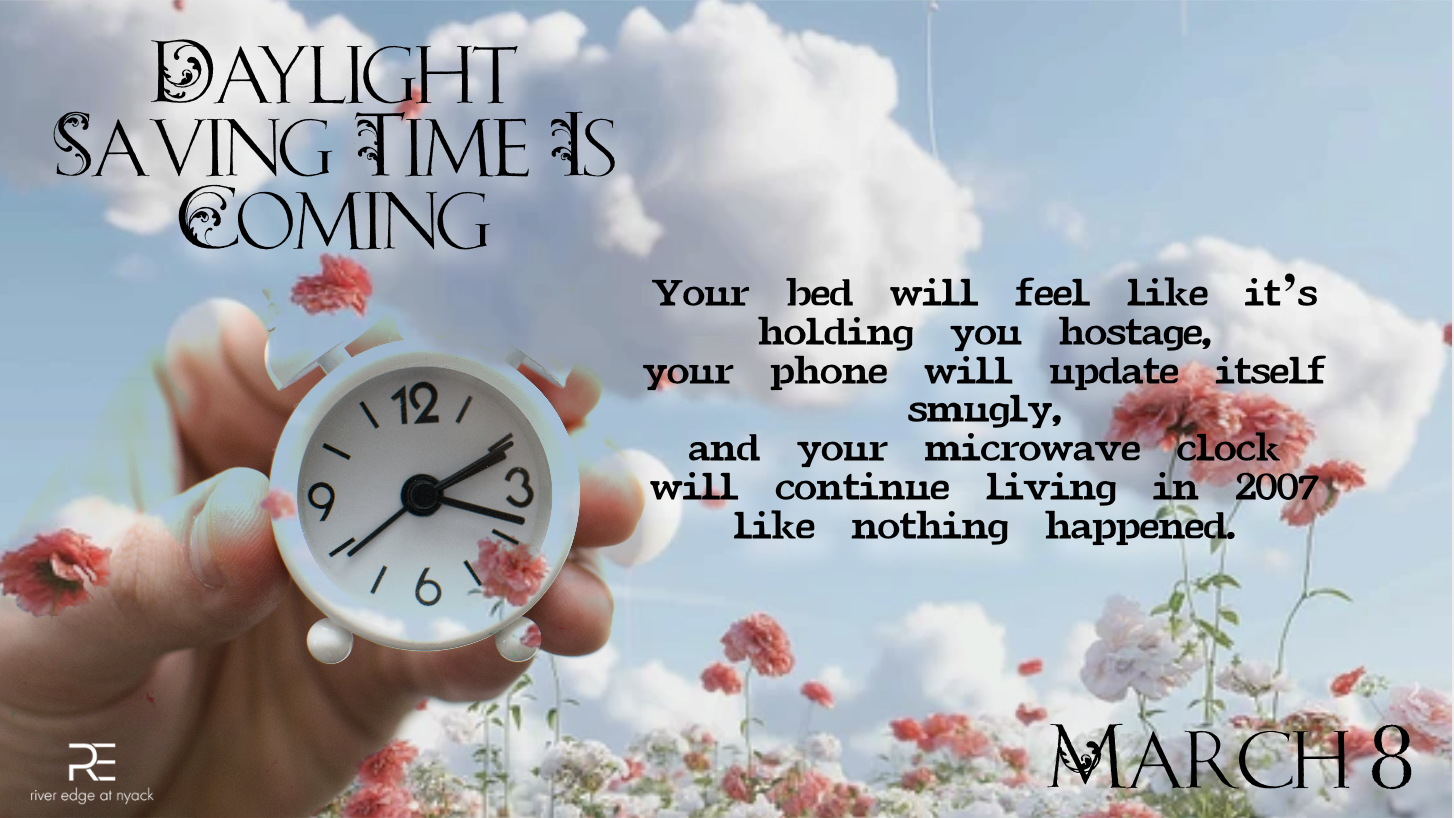
March 8 is the day we all agree—collectively, silently, tragically—to lose an hour of sleep for “the greater good.”
On Sunday, March 8, at 2:00 a.m., the clock does that weird little teleport: 1:59 → 3:00. Your bed will feel like it’s holding you hostage, your phone will update itself smugly, and your microwave clock will continue living in 2007 like nothing happened.
Welcome to Daylight Saving Time—the annual reminder that time is fake and society is held together by calendar invites.
So… what is Daylight Saving Time?
Daylight Saving Time (DST) is the practice of shifting the clock forward one hour in the spring and back one hour in the fall.
The goal is simple: more daylight in the evening, less daylight in the early morning when most of us are just a bundle of opinions and caffeine.
Also, quick public service announcement: it’s Daylight Saving Time, not “savings.” There’s no time bank. No interest. No dividends. Just vibes.
Why was it important back then?
DST didn’t become a thing because someone thought, “Let’s make brunch feel illegal twice a year.” It took off as a wartime strategy.
Historically, countries adopted DST during periods where conserving resources mattered—especially fuel for lighting and industry. The idea was: shift activity into brighter hours, and you use less artificial light. That logic helped DST spread and get standardized over time, especially in places with big seasonal changes in daylight.
And no, it wasn’t invented “for farmers.” That myth has survived longer than some empires.
What is it now?
Now DST is less “energy policy” and more a recurring cultural phenomenon—like a holiday nobody asked for but everyone still has to observe.
In the U.S., most states participate, but there are some notable “we’re good, thanks” holdouts:
- Hawaii doesn’t do DST.
- Most of Arizona doesn’t either (with exceptions like the Navajo Nation, which does).
The modern conversation is mostly about sleep disruption, health, safety, and whether we should stop messing with the clock twice a year.
What parts of the world use DST?
Not everyone does this.
DST is most common in:
- North America (though not universally)
- Europe (in many countries)
- Parts of Australia (some states/territories use it; others don’t)
It’s rare near the equator, because day length doesn’t swing much there—so changing clocks would be like rearranging furniture in a studio apartment. Technically possible. Spiritually pointless.
Will it ever change?
Possibly. The U.S. has seen repeated pushes to make DST permanent, meaning: no more falling back in autumn, just staying on “summer time” year-round.
Bills and proposals pop up regularly, and public opinion tends to spike twice a year (mysterious!)—but permanent change is still a political and practical tug-of-war.
In other words: it could change, but don’t bet your circadian rhythm on Congress.
Your tiny survival guide for March 8
- Saturday night: go to bed 30–60 minutes earlier if you can. (I know. I’m sorry.)
- Sunday morning: get sunlight early to help your body clock adjust.
- Monday: treat yourself like a freshly updated iPhone—technically functional, emotionally buffering.
DST is annoying, yes. But it’s also a little poetic: every spring, the world nudges you forward—whether you’re ready or not. Which is honestly rude. But kind of inspirational.